What «Official» Actually Means (and What It Doesn't)
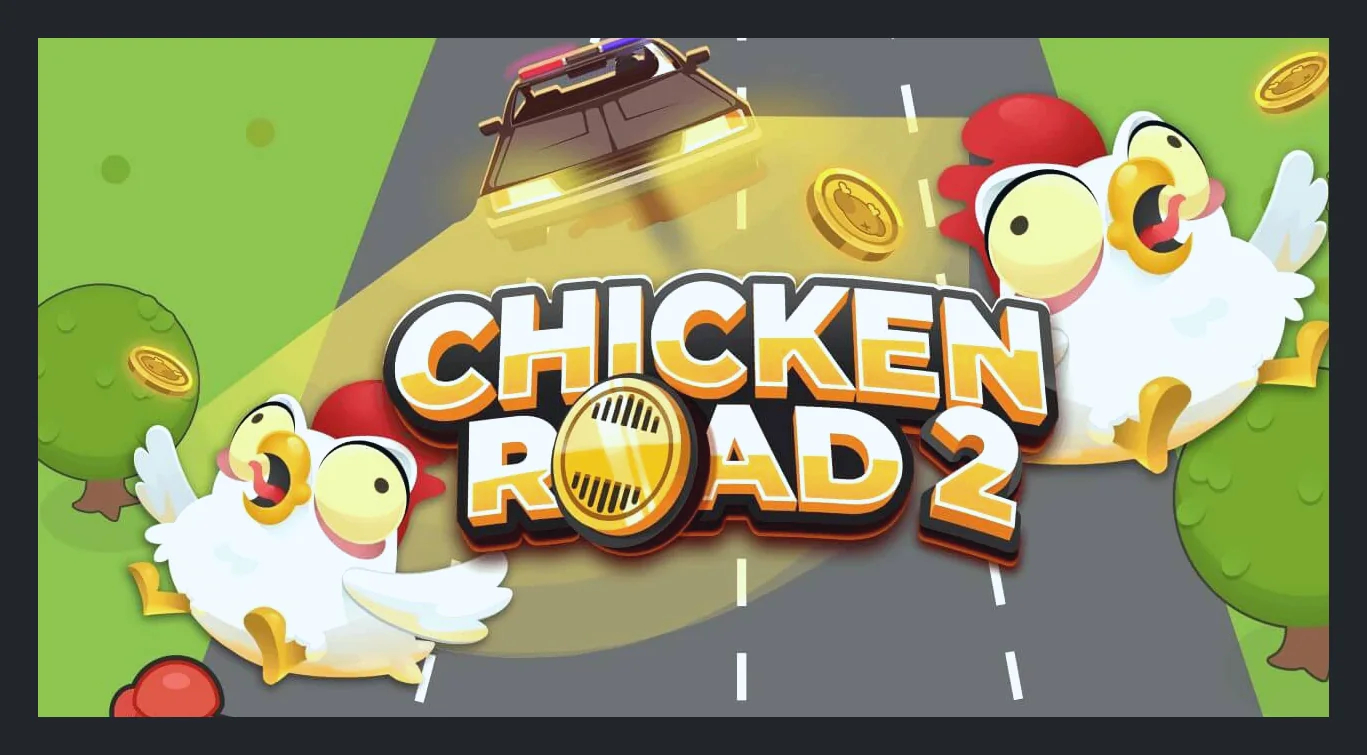
Here's the first thing that trips people up: there is no single official Chicken Road 2 website. The game comes from a provider—whoever built it—and that provider licenses it to dozens of UK casino operators, each with their own UKGC remote licence. When you see «official site» in a search result, it usually means «a site that legally offers the real build», not «the one true home of the game».
So the real question isn't «Which site is official?» but «How do I know the site in front of me is licensed, the game build is genuine, and my money won't vanish?» That's what this page walks through: the one-minute licence check, what login actually requires, where the official app question leads, and the red flags that signal a clone or a scam. We'll also cover what official status does not protect you from—because a valid licence and a fair game still mean you can lose, and the house edge doesn't care about paperwork.
Provider, Build, and the Licensing Chain
Chicken Road 2 is developed by a provider—let's call them the studio. That studio holds the intellectual property and the certified game build: the RNG, the paytable, the return-to-player figure. The studio does not run a casino. Instead, it licenses the game to operators, who integrate it into their platforms and serve it to players under their own UKGC remote licence.
When you play on a licensed UK site, three parties are in the chain: the studio that built the game, the platform or aggregator that hosts it, and the operator that holds the customer relationship and the UKGC licence. The «official» game is the build certified by a testing lab—usually iTech Labs, eCOGRA, or GLI—so the RNG matches the published RTP and the code hasn't been tampered with. Every UKGC-licensed operator is required to use certified builds, which is why you'll find the same game, with the same mechanics and the same RTP, across multiple brands.
What this means in practice: if you see Chicken Road 2 on ten different .co.uk casino sites, all ten are «official» as long as each operator holds a valid UKGC licence and the game comes from the certified build. There's no hierarchy of officialness—just licensed versus unlicensed. The studio's own website, if it has one, won't let you play for real money; it's a showcase for operators, not a casino.
The One-Minute Licence Verification Walkthrough
Here's how you check whether a site is legally allowed to offer Chicken Road 2 in the UK. It takes about sixty seconds and saves you from handing card details to an unlicensed operator.
- Scroll to the footer of the casino site. Every UKGC-licensed operator must display its licence number there, usually in a block that says «Licensed and regulated by the UK Gambling Commission» followed by a reference number in the format 000-000000-R-000000-000.
- Copy that licence number.
- Go to the UKGC public register—search for «UKGC register» or visit the Gambling Commission site and look for the licence search tool.
- Paste the number into the search box. If the licence is valid, you'll see the operator's legal entity, the licence type (should say «remote»), the status (should be «active» or «in force»), and the date it was granted.
- Cross-check the operator name in the register with the brand name on the site. Sometimes a group operates multiple brands under one licence, and that's fine—the footer will usually clarify this with a line like «operated by [legal entity]».
- If the number doesn't exist in the register, the status is suspended or revoked, or there's no licence number in the footer at all, walk away. That site cannot legally serve you.
This is not paranoia—it's the baseline. Unlicensed sites have no obligation to pay out, no oversight on game fairness, and no complaint route if something goes wrong. The UKGC publishes a warning list of operators that target British players without a licence; checking the register keeps you off that list.
Login: What the Account Needs Before You Play
On a UKGC-licensed site, you can't just sign up with an email and start spinning. Age and identity verification happen in stages, and the first one blocks you at the gate.
When you register, the site will ask for your name, date of birth, address, and usually your phone number. Behind the scenes, the operator runs an instant age and identity check against credit-reference data—Experian, Equifax, or similar. If that check passes, you can log in and make a deposit. If it fails or flags a mismatch, you'll be asked to upload documents before you can deposit: a photo ID (passport or driving licence) and proof of address (a bank statement or utility bill from the last three months). This usually takes 24 to 48 hours to review.
Once you're in, demo play—if the site offers it—is available immediately. Real-money play starts the moment your deposit clears. But here's where the first withdrawal gets slow: before the site processes a payout, it will ask for the same documents if you haven't already sent them, plus proof that the payment method is in your name. The debit card you used to deposit, a bank statement showing the account number for Faster Payments, or a screenshot of your PayPal account page. This is KYC (know your customer) and AML (anti-money laundering) compliance, and it's non-negotiable on a licensed site.
The payment method must be in your own name. Credit cards have been banned for gambling in the UK since April 2020, so you're looking at a debit card, an e-wallet like PayPal, Open Banking transfers via Trustly, Apple Pay, or paysafecard. If you try to deposit from someone else's card or bank account, the transaction will bounce or the withdrawal will be blocked when KYC runs. Shared accounts, even with a partner, break the rules.
One more gate: affordability checks. Under rules tightened in the last few years, operators must step in when your net deposits—total deposits minus total withdrawals—reach £150 in a calendar month. The first stage is automated: the site checks credit-reference data to estimate your income and spending. If that raises a flag, you'll be asked for payslips, bank statements, or tax returns. If you don't provide them, deposit limits get capped or the account gets suspended. This isn't the operator being difficult—it's UKGC policy, designed to catch problem gambling before it spirals.
The Official App Question (Spoiler: It's Complicated)
People search for «Chicken Road 2 app» or «Chicken Road 2 apk» expecting a standalone download, like a game from the App Store. Here's what actually exists.
The game itself doesn't have a dedicated app. It's a browser-based slot or crash game built in HTML5, so it runs on any modern phone, tablet, or desktop without a separate install. What does have apps is the casino operator: many UKGC-licensed brands offer iOS and Android apps that bundle their entire game catalogue, including Chicken Road 2 if they've licensed it.
The Google Play Store and Apple's App Store both allow real-money gambling apps in the UK, but only from operators who hold a valid UKGC licence and pass the store's vetting process. If you see a Chicken Road 2 app on either store, it's almost certainly a casino's app, not a standalone game. Before you download it, check the publisher name and match it to the licence in the UKGC register.
APK files are a different beast. An APK is an Android package file that bypasses the Play Store, and it's how unlicensed sites and clones often distribute their builds. If a site offers a Chicken Road 2 APK, ask yourself: why would a licensed operator skip the Play Store, which costs nothing to use and adds trust? The answer is usually that the site can't pass Google's checks, which means it's either unlicensed or hosting pirated game builds. Installing an APK from an unknown source also opens the door to malware. The safe route: play in the browser or download the operator's app from the official store, not from a third-party link.
In short, there's no official Chicken Road 2 app in the sense of a single, standalone download. There are official casino apps that include the game, and there's the browser version, which works on any device. Everything else is either a misunderstanding or a red flag.
When Something Goes Wrong: Complaint Path and Escalation
Imagine your withdrawal is stuck for a week, or the game froze mid-round and your stake vanished, or you think the RTP is lower than advertised. What do you do?
First: contact the operator's support team. Every UKGC-licensed site must have a complaints procedure, usually detailed in a section called «Complaints» or «Dispute Resolution» in the footer. Raise the issue in writing—email or live chat—and keep a record of what was said and when. The operator has eight weeks to investigate and respond.
If the response doesn't satisfy you, or if eight weeks pass with no resolution, you escalate to an ADR (alternative dispute resolution) service. Every UKGC-licensed operator must subscribe to an approved ADR—usually IBAS (Independent Betting Adjudication Service) or eCOGRA Dispute Resolution. The operator's terms will name which one they use. The ADR is free for you, and its decision is binding on the operator (though not on you—you can still take legal action if the ADR rules against you). The ADR will look at the evidence from both sides: game logs, account history, screenshots, correspondence. If the operator broke its own terms or acted unfairly, the ADR can order a refund or compensation.
If the issue is bigger—systematic unfairness, refusal to pay out, or you suspect the site is operating without a valid licence—report it to the UKGC directly. The Commission doesn't handle individual disputes (that's what the ADR is for), but it investigates operators and can suspend or revoke licences. You can submit a complaint through the UKGC website, and if you lost money to an unlicensed operator, you can also report it to Action Fraud, the UK's national fraud reporting centre.
One scenario where none of this helps: you registered with an unlicensed site. No ADR, no UKGC oversight, no legal recourse in the UK. That's why the licence check in section two isn't optional.
Limits, Self-Exclusion, and Cutting Off Access
If you're reading this section, you're either planning ahead or you've noticed your balance draining faster than you expected. Either way, here's what the tools actually do.
Deposit limits: every UKGC site must let you set daily, weekly, or monthly caps on how much you can deposit. You can lower them instantly; raising them usually has a 24-hour cooling-off delay. Stake limits are built into the game by regulation: £5.00 per spin for players aged 25 and over, £2.00 per spin if you're 18 to 24. The site knows your age from the KYC check, so the cap applies automatically.
Loss limits and session timers: some operators offer these as well. A loss limit tracks your net loss over a period (deposits minus withdrawals) and blocks play when you hit the threshold. A session timer logs you out after a set duration. Neither is mandatory, so not every site has them, but they're increasingly common.
Self-exclusion: if you want to stop playing for a fixed period, you can self-exclude from a single operator—usually for six months, one year, or five years. The operator blocks your account, rejects new registrations from your details, and filters your name out of marketing lists. The catch: this only works for that one brand. If the operator runs multiple casinos, check whether the exclusion covers all of them or just the site you're on.
GAMSTOP: this is the national self-exclusion scheme, and it's the only tool that blocks every UKGC-licensed site at once. You register once, choose a duration (six months, one year, or five years), and every licensed operator in the UK is notified within 24 hours. From that point on, any site that checks your details against the GAMSTOP register will block your registration and close existing accounts. You can't reverse it until the period expires, and that's by design—it's meant to be a hard stop.
If you're struggling with gambling, GAMSTOP is the blunt instrument that works. For advice and support, the national service is BeGambleAware, free and confidential. The number is on every licensed site's footer, and it's not there for decoration.
Red Flags: How to Spot a Clone or a Scam
Not every site that claims to offer Chicken Road 2 is what it says. Here's what to watch for.
- No licence number in the footer, or a number that doesn't exist in the UKGC register. This is the primary flag—if the licence isn't verifiable, nothing else matters.
- The site claims to be «the official Chicken Road 2 site» or «the original game». There's no single official site, and legitimate operators don't usually make that claim because it's misleading. If the pitch sounds like the game is exclusive to them, they're either confused or lying.
- APK downloads offered directly on the site, especially if there's no presence in the Google Play Store. Legitimate operators don't need to distribute APKs because they can publish through official channels.
- Payment methods that don't match UK norms: cryptocurrency-only deposits, credit card acceptance (banned since 2020), or e-wallets you've never heard of. Licensed sites stick to Visa/Mastercard debit, PayPal, Trustly, Apple Pay, and paysafecard.
- No KYC or age verification before deposit. If you can fund your account and play instantly without any identity check, the site isn't following UKGC rules.
- Bonuses that sound too good: 500% match, no wager requirements, «guaranteed wins». Every bonus on a licensed site has a wager requirement (usually 35x to 50x), and the terms are spelled out in a document you can read before you deposit. If the offer is vague or the terms are hidden, it's bait.
- Customer support that doesn't respond, or responds with generic copy-paste answers that don't address your question. Licensed operators are required to have accessible support; if you can't get a human response within a reasonable time, that's a warning.
- Game behaviour that feels off: the RTP seems far below what's advertised, the game freezes frequently without refunds, or rounds take much longer to resolve than they should. This is harder to prove without logs, but if the experience is consistently worse than on other sites, the build may be tampered with.
If multiple flags line up, assume the site is either unlicensed or running a clone. Don't deposit, don't create an account, and don't give them your payment details. The UKGC maintains a warning list of operators that target British players without a licence—check it if you're unsure about a brand.
What Official Status Does Not Guarantee
Let's close with the part that disappoints people: a valid UKGC licence and a certified game build do not mean you'll win, or even that the game will feel fair.
The RTP is a long-run average. If Chicken Road 2 has an RTP of 96%, that means the game is designed to return £96.00 for every £100.00 wagered over millions of spins. In a single session, you can lose your entire balance without a single win, and that's statistically normal for a high-volatility game. The RNG doesn't owe you a win, and it doesn't balance out your losses within a session, a day, or even a month. Unlucky streaks are built into the maths.
The house edge is baked in. Every crash game, every slot, every casino product is designed so the operator makes a profit over time. That's why the RTP is below 100%. Official status means the game runs the maths as advertised—it doesn't make the maths favourable to you.
Bonuses have strings. A £50.00 bonus with a 40x wager requirement means you must bet £2,000.00 before you can withdraw any winnings. Some games contribute less than others to that total, and Chicken Road 2 might not be eligible at all. Read the terms before you claim, because the bonus can trap your deposit as well as the bonus funds.
First withdrawals take time. Even on a licensed site with fast payout e-wallets, your first cashout will be delayed by KYC checks. If you deposit on Monday and try to withdraw on Tuesday, expect to wait until Wednesday or Thursday while the operator verifies your documents. After that, e-wallet withdrawals usually clear within a few hours, and Faster Payments to a UK bank take one to two working days. But the first one is always slower.
Official doesn't mean risk-free. It means regulated, audited, and legally accountable. It means you have a complaint route if something breaks. It doesn't mean the game is easy to beat, or that the operator will bend the rules in your favour, or that you'll walk away with a profit. The safest version of Chicken Road 2 is still a game where the house has the edge, and official status won't change that.
FAQ
Is there one official Chicken Road 2 website I should use?
No. The game is licensed to dozens of UK casino operators, each with its own UKGC remote licence. «Official» means the operator is licensed and the game build is certified—there's no single canonical site. Check the UKGC register to verify the operator's licence number, and you'll know you're playing the real build on a legal platform.
Can I play Chicken Road 2 without verifying my identity?
No. Every UKGC-licensed site must verify your age and identity before you can deposit or play for real money. Most sites run an instant check against credit-reference data when you register; if that fails, you'll need to upload a photo ID and proof of address. Demo play may be available without full KYC, but it's often restricted to logged-in, age-verified accounts.
What should I do if my withdrawal is delayed or rejected?
First, check whether you've completed KYC—most first-withdrawal delays are down to missing documents. If your documents were approved and the withdrawal is still stuck, contact the operator's support team and keep a record of the conversation. If they don't resolve it within eight weeks, escalate to the ADR service named in the operator's terms (usually IBAS or eCOGRA). The ADR's decision is binding on the operator and free for you.
How do I block myself from all UK casino sites at once?
Register with GAMSTOP, the national self-exclusion scheme. You choose a duration—six months, one year, or five years—and every UKGC-licensed operator is notified within 24 hours. From that point on, they'll block new registrations and close existing accounts linked to your details. The exclusion can't be reversed until the period expires, so it's a hard stop by design. For support, contact BeGambleAware.